
+11%
Health
Understanding Repetitive Thoughts and Relationship Stress
Repeated thoughts can be difficult to switch off, particularly when they become distressing or start affecting everyday life. For people experiencing obsessions or compulsive…
Evidence-aware guides for health, fitness, nutrition and everyday wellbeing—organized like a clear progress dashboard.
Every category is positioned as a milestone along one connected learning path.
Repeated thoughts can be difficult to switch off, particularly when they become distressing or start affecting everyday life. For people experiencing obsessions or compulsive…

People considering hair restoration usually focus on density, but three other questions come up again and again: will the new hair feel like the old hair, what will the whole process cost, and how much disruption will it cause to daily life? This article looks at each one in turn, using the general principles that surgeons explain during consultations. Does Transplanted Hair Keep Its Texture? A follicle moved from the back of the scalp generally keeps the characteristics it had in its original location. That is why donor hair from the back and sides is preferred: it is usually resistant to the hormone-driven thinning that affects the top of the head. In most people, the transplanted hair eventually blends with the surrounding hair in thickness, colour and curl. During the first months of regrowth, however, some patients notice that new hairs feel finer, wirier or wavier than expected. This early phase often settles as the hair matures, which can take a year or more. If you are asking can a hair transplant change hair texture, the honest answer is that temporary changes are common, while lasting differences are less so and usually reflect differences between donor and recipient hair. Factors that influence the final feel Understanding the Cost Hair replacement covers several very different options, and their costs behave differently over time. Hair systems and medication involve ongoing expenses, while a transplant is usually a larger single payment. When comparing quotes, it helps to look at what is included rather than only the headline figure. A detailed breakdown of how much hair replacement costs shows why the number of grafts, the technique and the services bundled into a package all move the price. Planning Downtime The procedure is normally done in a day under local anaesthesia, but the visible healing period matters more for planning. Swelling tends to peak in the first few days, and small crusts usually clear within about two weeks. Desk workers often return sooner than people whose jobs involve physical effort, heat or protective headwear. Working out how much time off work you need in advance makes it easier to choose a date that fits your calendar. Questions Worth Asking Before You Decide A good consultation should leave you with clear answers about the expected number of grafts, the likely timeline of growth, the aftercare involved and what happens if you need help after you return home. Ask to see how the plan was calculated, and make sure you understand which costs are included. Realistic expectations about texture, budget and downtime make the months of waiting for growth far easier to manage.

Starting a family through surrogacy is an important decision that involves legal, medical, financial, and emotional considerations. For many same-sex couples, Mexico has become…
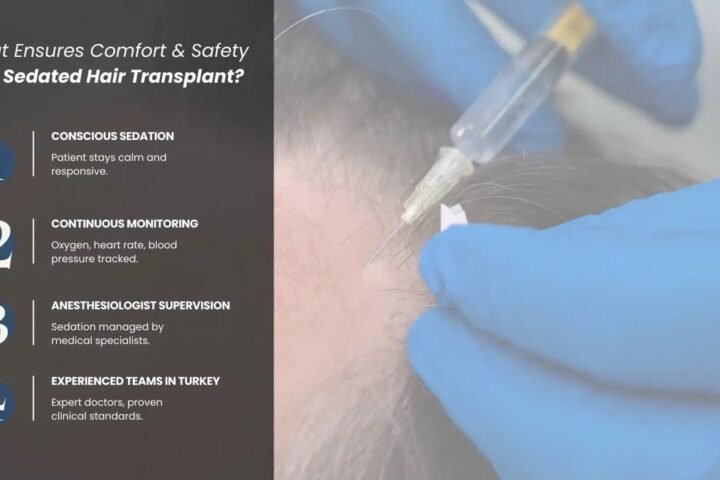
For many people, the biggest barrier to hair restoration is not cost or time but anxiety about the procedure itself. Lying still for several hours while local anaesthesia is applied can feel daunting. Modern hair restoration offers several ways to make the experience more comfortable, from sedation to gentler implantation tools. Knowing your options can make the decision much easier. Why Comfort Matters in Hair Restoration A hair transplant is performed under local anaesthesia, so patients are awake. The procedure can take most of a day, depending on the number of grafts. Anxiety can make the anaesthetic injections feel more uncomfortable and the hours feel longer. A calm, relaxed patient also makes it easier for the medical team to work steadily. Sedation: Staying Calm Without General Anaesthesia A sedated hair transplant uses conscious sedation to help patients relax. The patient remains responsive and breathes independently, but feels calmer and less aware of the local anaesthetic being applied. What sedation involves Sedation is not right for everyone. Certain health conditions and medications need to be discussed with the medical team in advance. DHI: A Precise Implantation Method DHI hair transplant uses an implanter pen to open the channel and place the graft in one movement. Because the angle and depth of each graft are controlled directly, DHI is often chosen for detailed hairline work and for adding density between existing hairs. It can also be used without shaving the whole head in suitable cases. DHI compared with classic FUE Restoring Hair on Scars Scars on the scalp can come from accidents, previous surgery, burns or older transplant methods that left linear scars. Hair does not grow naturally on scar tissue, but a hair transplant on scars can often camouflage them by placing grafts directly into the scarred skin. ] Things to know about scar treatment Choosing the Right Combination These approaches are not mutually exclusive. A patient with a scar near the hairline might have DHI implantation under sedation, for example. The right plan depends on your medical history, the area to be treated and how you feel about the procedure. The most important step is an honest conversation with a licensed medical team working in an authorized facility. Conclusion Comfort and precision have improved a great deal in hair restoration. Sedation can help anxious patients relax, DHI offers fine control over each graft, and scar treatment can restore hair where it no longer grows naturally. Understanding these options helps you choose a procedure that suits both your scalp and your peace of mind.
A guest article on a health website can help readers understand a topic they are already thinking about, from sleep habits to preventive care.…
Each system combines a focused illustration, a clear outcome and a direct route into useful resources.
Clear explanations turn complex health topics into usable knowledge.
Structured guides help readers evaluate choices with less confusion.
Action-led articles translate insight into realistic everyday steps.
Milestones and related resources support continued learning.

Ask any group of people who live with chronic back pain what makes it worse, and you will almost inevitably hear someone mention the…

Mental health can affect how a person thinks, feels, behaves, and handles everyday life. Mental health symptoms can appear in many different ways, and…

Introduction Ever felt “off” for a few days and just pushed through it because you had too much work to do? Most of us…

Introduction Every time the seasons change in Jaipur, my neighbor’s entire family catches a cold — every single time — while she barely sneezes.…

Introduction You’ve just picked up your lab report, and it’s a wall of numbers, arrows, and abbreviations that mean absolutely nothing to you. Sound…

Introduction It’s 11 PM, you’ve got a mild fever, and you’re stuck googling symptoms trying to decide: sleep it off or rush to the…
Resources are grouped by health system and connected through relevant milestones, categories and related guides.
No. Healthnixo provides educational information and readers should consult qualified professionals for personal medical decisions.
Yes. Gutenberg and Classic Editor lists, tables, quotes, images and FAQ-style details receive consistent responsive styling.
Each guide includes category breadcrumbs, contextual internal links and a Next Milestones section.